After a cordial call, Sheinbaum and Trump resume dialogue and reaffirm coordination on security and trade issues.
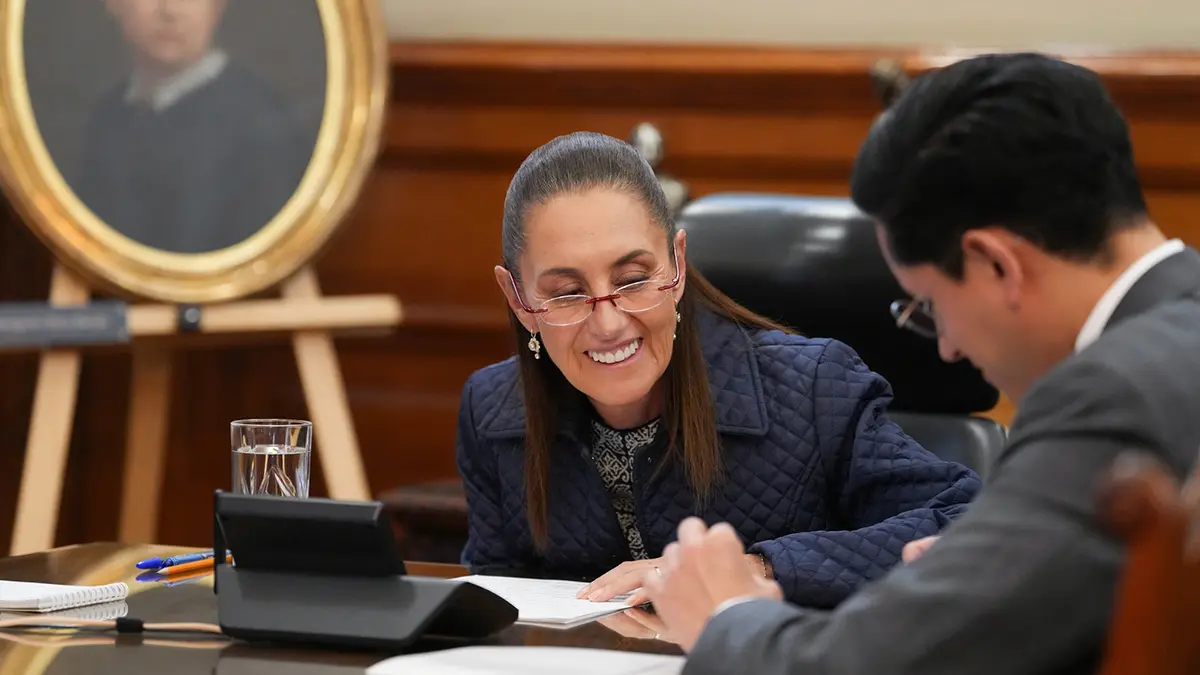
President Claudia Sheinbaum reported that she held a telephone conversation with US President Donald Trump, in which both agreed to keep bilateral cooperation channels open on two strategic fronts: security and the economic agenda.
The contact occurred amidst recent statements from Washington that heightened political tensions, although the official message released by Mexico emphasized the continuation of dialogue between the two governments.
Hours after her morning press conference at the National Palace, the President shared a brief public statement on social media to report on the exchange.
In that statement, she described the call as a cordial exchange and stressed that communication with the White House will continue through further talks and working meetings.
According to Sheinbaum, the call reaffirmed joint efforts on security issues and the continuation of trade talks.
Furthermore, both sides reportedly agreed to further communication at a later date and a visit by members of the US president’s team to Mexico to continue pending negotiations.
Earlier, before revealing the content of the call, the president had addressed another issue that has gained prominence in the bilateral relationship: reports of a possible review of the Mexican consular network in the United States.
In her morning address, she denied any evidence of political activity by the consulates and maintained that, to date, her administration has not received formal notification from the State Department regarding specific accusations against these missions.
The president also questioned news reports that picked up on a CBS News report stating that U.S. authorities had begun a review of the operations of Mexico’s 53 consulates in the United States.
In response to this information, she insisted that the role of these offices is limited to providing services, protection, and assistance to the Mexican community residing on the other side of the border.
In this context, Sheinbaum emphasized that the consular offices were not created to intervene in electoral disputes or partisan politics in the United States.
She explained that their contact with local authorities is for administrative and community support purposes stemming from the presence of millions of Mexican nationals, not for political activity.
In parallel, the head of the Executive Branch announced that her government is preparing an expanded, weekly format for the segment called “Lie Detector,” with the aim of responding to inaccurate reports, clarifying statements she considers false, and reinforcing the dissemination of the official position on issues of high public impact.
The president insisted that, to date, there has been no official statement from the U.S. government formally questioning the operation of Mexican consulates.
Based on this premise, she described as disproportionate the interpretations that anticipate sanctions, diplomatic replacements, or an imminent deterioration of the bilateral relationship, and attributed part of this narrative to sectors seeking to amplify a scenario of political confrontation.
Despite recent episodes of friction, the central message of the Mexican government is to preserve a functional relationship with Washington.
For the Sheinbaum administration, dialogue with the United States will remain a priority, both because of the shared dimension of security challenges and the importance of trade between the two economies.
The next bilateral meetings will likely be characterized by this balance between political firmness and practical cooperation.