Sheinbaum inaugurates campus in Yucatán and states her position on honesty, public education, and urban infrastructure, asserting that no foreign government will steal the transformation.
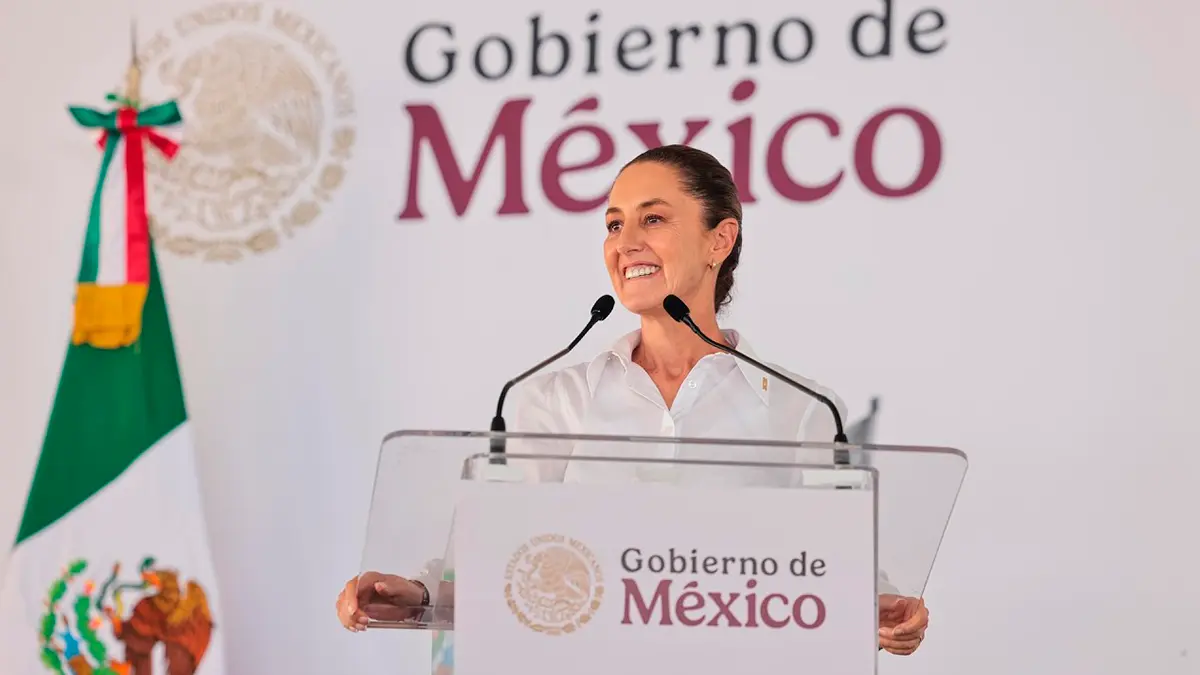
During a working visit to Yucatán, president Claudia Sheinbaum led the opening of the Kanasín campus of the Rosario Castellanos National University and used the event to deliver a political message focused on honesty within the project she leads, as well as on the defense of public education and the expansion of social rights.
At the same event, the Yucatán government raised the need for federal support to address shortcomings in water, mobility, and security in the Mérida metropolitan area.
The day’s events centered on the inauguration of the Kanasín Academic Unit, a new higher education facility that, according to press reports, will expand access for more than 1,300 students in the state.
The opening is part of the federal strategy to increase enrollment at the upper secondary and higher education levels, with new facilities and equipment to strengthen access to professional studies in the southeast of the country.
In her remarks, Sheinbaum emphasized that the movement she represents should not serve as a cover for conduct that deviates from legality or public ethics.
The mayor made it clear that the legitimacy of her project, she affirmed, depends on maintaining a course of action based on integrity and close contact with the citizens.
The statement came at a time of heightened media attention regarding the behavior of figures linked to national public life.
The president also linked this message to a defense of public education. She recalled her time at public universities and presented the expansion of academic spaces as a concrete way to realize the right to education.
Following this line of reasoning, she maintained that the opening of new campuses represents not only infrastructure but also a commitment to reducing inequalities and offering opportunities to young people who for years faced limitations in continuing their education.
Along with the topic of education, the president listed other lines of action of her administration related to health, scholarships, and regional infrastructure.
In this overview, she presented the strengthening of public services and the continuation of strategic projects as part of an agenda that, she said, seeks to translate public resources into tangible benefits for the population.
The message was directed especially to the students and families gathered at the event, before whom she insisted that social programs must be sustained with criteria of responsibility and transparency.
Another key theme of the speech was the idea that social progress is not permanent in itself and requires citizen support to be preserved.
Sheinbaum presented her administration as one based on popular participation and maintained that the government’s leadership must respond to this social base.
In that context, she also defended national sovereignty against any attempt at external pressure on the country’s political direction.
At the same meeting, Governor Joaquín Díaz Mena presented the president with an assessment of the pressures facing the Mérida metropolitan area due to its rapid growth.
His proposal focused on three key areas: drinking water supply, urban mobility, and strengthening security infrastructure.
He explained that the existing infrastructure in several sectors has fallen behind the population increase and the territorial expansion of the Yucatecan capital.
As part of this proposal, Díaz Mena suggested the possibility of securing 1.5 billion pesos in funding to combine state and federal resources for priority projects.
The initiative, identified in news coverage as the Mérida Renaissance Plan, includes modernization of the water system, improvements to problematic intersections, and actions to enhance operational capacity in security.
At the close of the event, Sheinbaum expressed her willingness to support, in particular, the actions related to water supply for the state capital.
The presidential visit thus conveyed two main messages: first, the expansion of educational opportunities as a flagship public policy in the southeast; and second, the establishment of a coordination mechanism between the federal and state governments to address urban pressures already impacting the daily lives of thousands of residents in Mérida and its surrounding areas.
In this way, the tour of Yucatán combined an educational agenda, political planning, and infrastructure management into a single day.