The President highlights the historical role of the Chichimeca and Otomi peoples in Guanajuato and Querétaro.
Mexican President Claudia Sheinbaum made an official visit this Sunday, January 18, to San Miguel de Allende, where she led the presentation of the Justice Plan for the Indigenous Peoples of Guanajuato and Querétaro.
The event took place in the community of Cruz del Palmar, a meeting point between ancestral traditions and government dialogue.
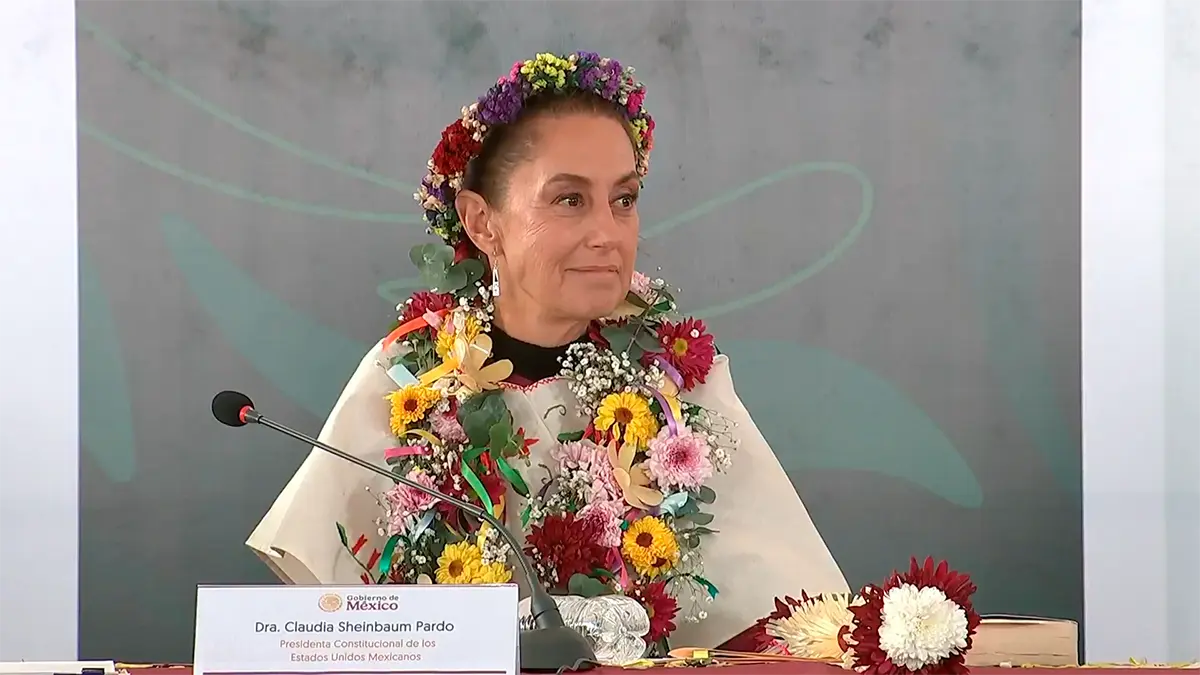
Upon her arrival, the President was received in an atmosphere rich with symbolism: members of the Chichimeca and Otomi communities welcomed her with floral arrangements, traditional music, and gestures of affection.
This reception, in addition to reflecting local hospitality, underscored the importance of the dialogue between authorities and Indigenous communities.
During the ceremony, the president received gifts characteristic of the region, which she wore during the official proceedings as a sign of respect for the customs of the host peoples.
Claudia Sheinbaum Inaugurates New IMSS Regional General Hospital
This interaction demonstrated the government’s recognition of the cultural richness and invaluable contributions of these communities.
Prior to the formal presentation of the Justice Plan, the mayor held a brief meeting with representatives of the Indigenous peoples, who expressed their concerns and proposals in an atmosphere of open dialogue.
Sheinbaum reiterated her gratitude for the expressions of affection and reaffirmed her commitment to addressing the historical demands of Indigenous peoples.
During her speech, the mayor emphasized that the Justice Plan for the Chichimeca and Otomí peoples represents a recognition of the fundamental role these communities have played throughout national history, especially in the current context of the so-called Fourth Transformation.
She stressed that the consolidation of Mexican sovereignty would not be possible without the active participation of Indigenous peoples.
The announcement of the Justice Plan marks a significant step in the federal agenda for the development and inclusion of Indigenous peoples, emphasizing the importance of collaboration between the government and communities for social well-being.
The day concluded in an atmosphere of mutual respect and renewed hope for the consolidation of the historical rights of the region’s indigenous peoples.