Breaking news: Trump hardens his tone against Iran and increases pressure on a deal that remains uncertain. Negotiations between Washington and Tehran are at a critical juncture.
While Donald Trump insists that Iran will face severe consequences if it does not reach an agreement, Tehran responds with calls for a diplomatic approach, and Pakistan intensifies its role as mediator.
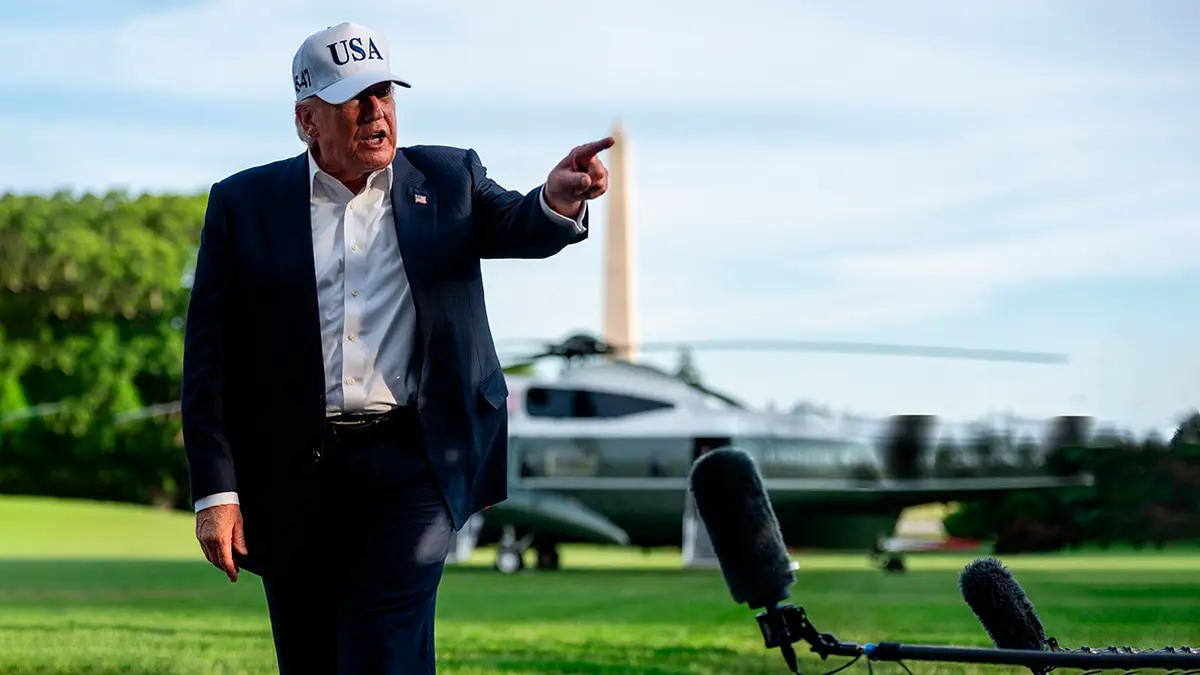
Donald Trump issued another direct warning to Iran.
In a conversation with the French network BFM TV, the US president stated that Tehran is interested in reaching an agreement with Washington, but warned that if this does not happen, the situation will be very adverse for the Islamic Republic.
International media outlets reported the message as a further sign of pressure in a process that remains without a clear outcome.
Trump himself acknowledged that there is no certainty about the signing of an agreement. His stance combines public pressure with political uncertainty.
On the one hand, he insists that the negotiations must be concluded. On the other hand, he admits that he does not know if the Iranian leadership will accept the conditions set by the United States.
Trump Avoids Committing to Taiwan Defense After Xi Jinping Question
This combination has set the tone for their most recent statements on the crisis. From Tehran, the response has sought to position itself on different ground.
President Masoud Pezeshkian maintained in various public messages that Iran remains willing to resume diplomatic efforts, provided there are conditions that allow for dialogue based on clear principles and without unilateral pressure.
The official Iranian narrative insists that a negotiated solution remains possible, although a deep distrust of Washington persists.
In this context, Pakistan has once again emerged as a relevant player. Interior Minister Mohsin Naqvi arrived in Tehran for a two-day official visit, framed within Islamabad’s efforts to facilitate contacts between the two sides and promote regional stability.
The visit came after renewed reports of attempts to prevent the talks from collapsing altogether.
The diplomatic standoff is also unfolding under a heavy military shadow. Alongside the negotiations, the U.S. naval presence in the region has been one of the most closely watched aspects of the conflict.
This factor has reinforced the perception that, despite messages about dialogue, tensions remain high and the margin for strategic error remains open.
The signals coming from Washington and Tehran reveal two parallel narratives. The United States is escalating its pressure. Iran is responding with a message of conditional openness.
Caught between them, external mediators are trying to preserve a path to contact that would prevent further escalation and sustain the cessation of hostilities achieved in previous weeks.
The talks, however, are progressing with difficulty. Various international reports agree that the process is stalled despite a fragile ceasefire.
In this scenario, every public statement carries greater weight, because it can either bring the parties closer to an understanding or push them back into a logic of confrontation.
The significance of this moment is not limited to the bilateral relationship between Washington and Tehran. It also impacts energy stability, maritime security, and the ability of several governments to contain a broader crisis.
That is why every gesture, every diplomatic visit, and every public statement is being interpreted as a piece of a negotiation that has yet to find its footing.
For now, the situation remains open. Trump is maintaining the pressure and making it clear that he expects a favorable response. Iran insists that diplomacy still has a place, but demands changes in the way negotiations are conducted.
With Pakistan caught between these two fronts, the region is entering a decisive phase in which any progress, or any breakdown, could redefine the political and security balance in the Middle East.