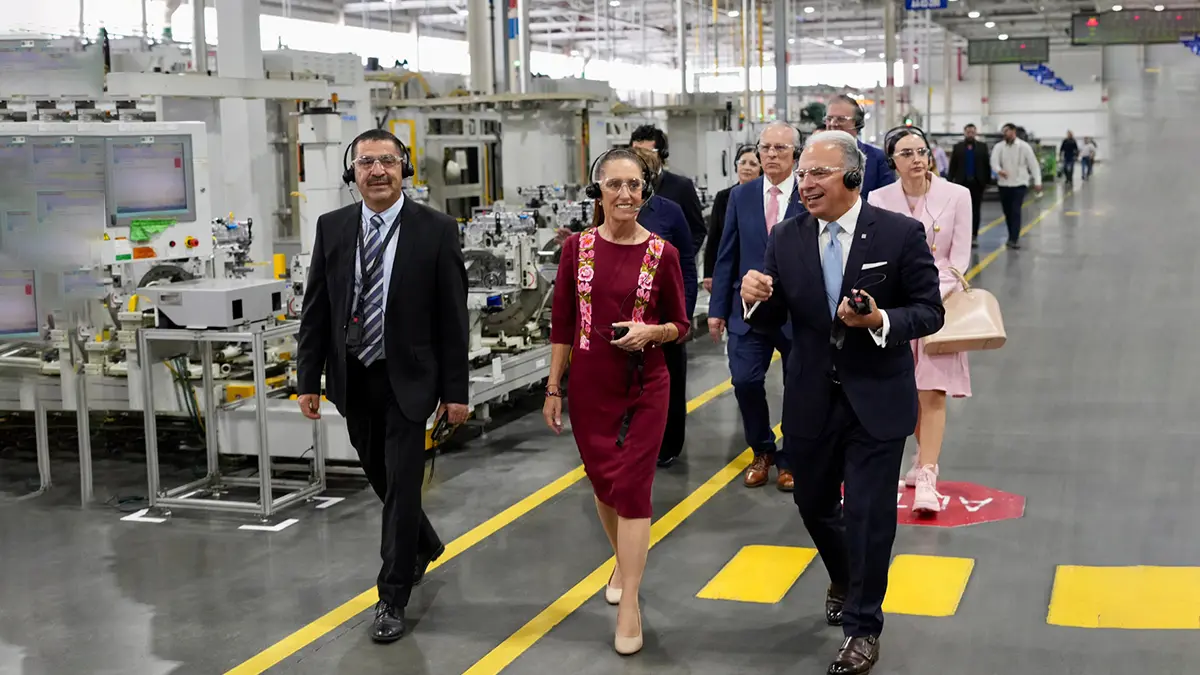
Claudia Sheinbaum Shakes Up the Automotive Future. General Motors’ decision opens a new chapter for the national industry, as the company confirms a one billion dollar investment and places Mexico at the center of a move that combines production, employment, and confidence.
The plan envisions manufacturing more than 80,000 vehicles annually, currently imported from Asia. This goal reduces imports, strengthens domestic manufacturing, and protects highly specialized jobs.
The automaker will relocate the assembly of the Chevrolet Aveo and Chevrolet Groove to Mexico, two models in high demand in the domestic market. This move aims to leverage existing capacity and respond more quickly to national consumption.
From Toluca, Sheinbaum presented the announcement as concrete proof of the Mexico Plan, a strategy that seeks to increase domestic production, strengthen the domestic market, and give greater weight to national industrial supply chains.
Under that vision, the president maintains that the project integrates workers, business owners and governments, with the idea that the automotive industry functions as a shared development platform and not just as an isolated operation.
Sheinbaum points out that this move was not improvised, as she initiated talks with executives from major automakers before assuming the presidency to anticipate changes in the international trade environment.
The president insists that coordination between authorities, companies, and specialized personnel is crucial to overcoming external pressures, sustaining investments, and transforming an industrial announcement into a signal of stability for the country.
The final message aims to inspire confidence, but also to ensure permanence, because the government seeks to have automakers maintain and expand operations in Mexico, in a global context where competition for industrial investment is becoming more intense.
The announcement also has a fundamental commercial dimension, since producing previously imported vehicles in Mexico allows for greater profit margins in an international landscape marked by tariffs, higher logistics costs, and strained supply chains.