New controversy: Trump reignites debate by portraying Venezuela as the “51st state” of the United States.
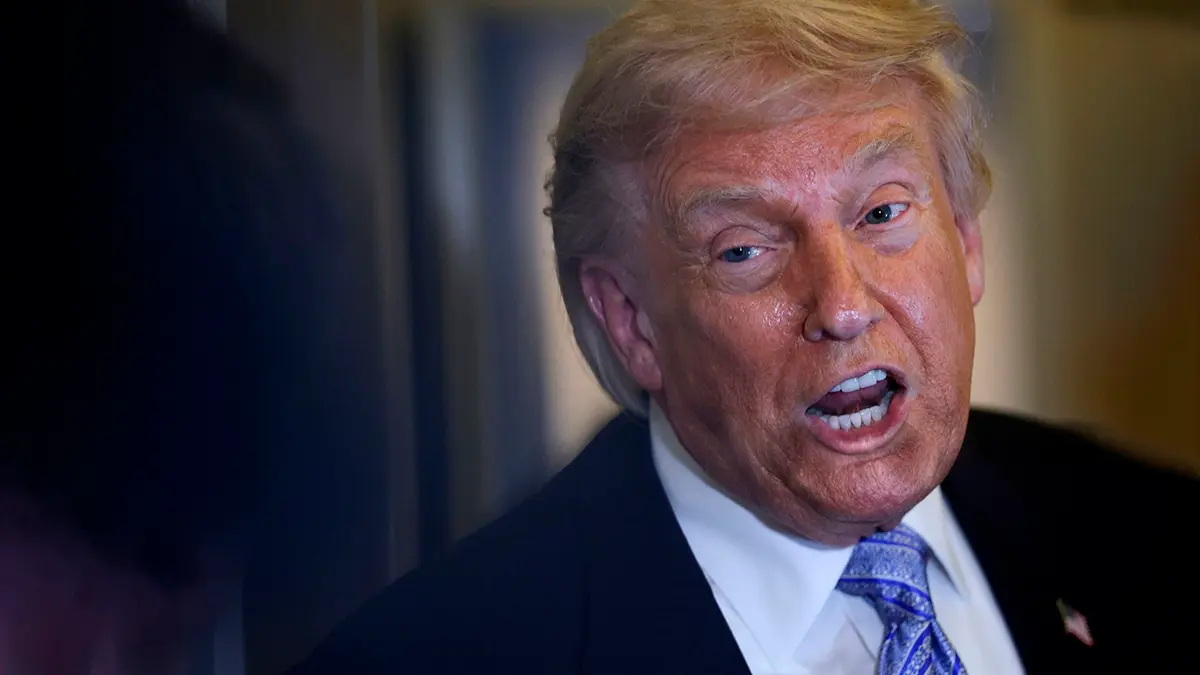
Donald Trump’s latest post has once again inflamed the discussion surrounding Venezuelan sovereignty.
The message appeared at a delicate moment, with open diplomatic repercussions, reactions from Caracas, and the recent precedent of Alex Saab’s extradition to the United States.
Donald Trump has once again placed Venezuela at the center of international controversy. This time, he did so with an image shared on Truth Social, which presented a map of the South American country covered with the U.S. flag and the label “51st State.”

The post appeared a few days after US media outlets picked up on reports of a supposed political evaluation in Washington regarding Venezuela’s institutional future.
The message’s reach grew when the image was reposted by the official White House account on Twitter.
This institutional amplification increased the impact of a post that, due to its symbolic content, opened up new interpretations of the US government’s stance on the Venezuelan political process.
The illustration shows Venezuela visually integrated into the United States’ graphic identity, but omitted the Essequibo territory.
This detail did not go unnoticed. The area remains disputed between Venezuela and Guyana and is part of a legal case before the International Court of Justice, so its absence added another layer of sensitivity to the post.
Claudia Sheinbaum and her Strong Defense of Mexico’s Sovereignty
Trump’s message came amid a period of political realignment in Venezuela. In recent months, various reports have described a transitional scenario marked by power shifts, renewed ties with Washington, and renewed discussions about institutional and economic control of the country. In this context, any gesture from the United States takes on greater significance.
From Caracas, the response came from Delcy Rodríguez. The interim president categorically rejected any possibility of annexation and defended Venezuelan independence as a non-negotiable principle.
Her reaction sought to contain the political fallout from the message and reaffirm a narrative of sovereignty in the face of external pressure.
Rodríguez stated unequivocally that Venezuela does not contemplate becoming a federated entity of the United States.
At the same time, she insisted that the country’s political history is linked to the defense of its autonomy. This stance aims to maintain certain channels of cooperation with Washington without compromising the symbolic ground of national sovereignty.
The new controversy also coincided with the recent transfer of Alex Saab to the United States, a decision announced by Venezuelan authorities and reported by international media as a deportation.
This development reinforced the perception that the relationship between the two countries is undergoing a period of redefinition, with signs of occasional cooperation, but also with episodes that reopen political and diplomatic tensions.
Meanwhile, Trump’s previous statements about the possibility of incorporating Venezuela as a new U.S. state had already provoked questions both within and outside the region.
The insistence on this language, although shrouded in political ambiguity, ultimately impacts the debate on sovereignty, geopolitical influence, and control of strategic resources, especially in a country with vast energy reserves.
Thus, an image posted on social media once again became a highly charged political event.
What some may see as a visual provocation, others interpret as a sign of how Washington chooses to intervene in the public discourse on Venezuela.
And in that arena, every symbol carries weight, every reaction counts, and every message leaves a diplomatic imprint that is hard to ignore.