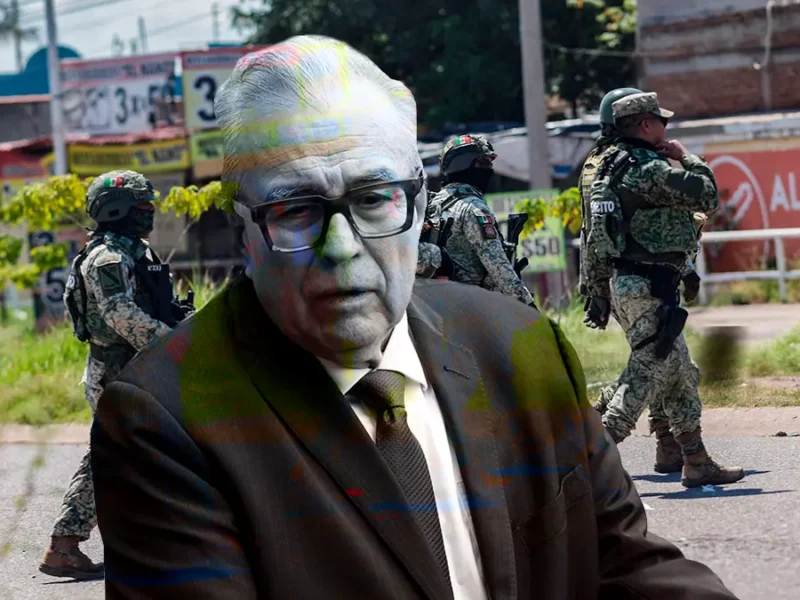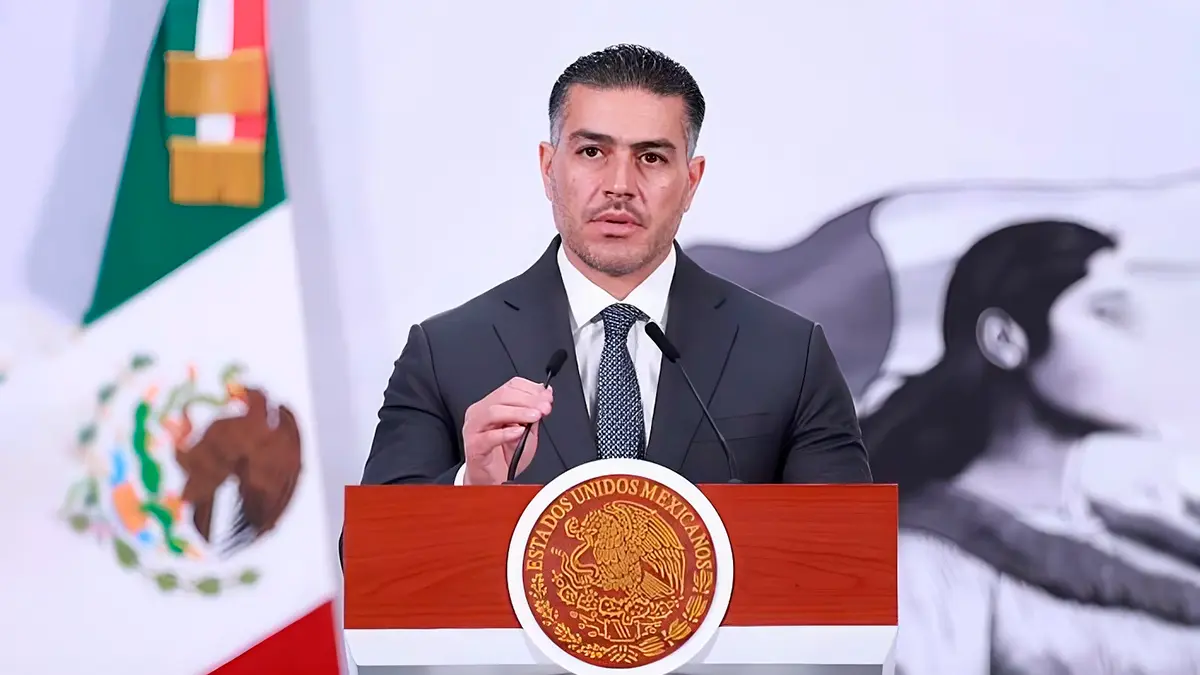
When asked, “Where is Rocha Moya?”, Harfuch addressed rumors about Rocha Moya and clarified who is protecting him in Sinaloa.
The Secretary of Security specified that the governor on leave remains in the state and that his protection is not the responsibility of the federal government, but rather of local authorities, amidst growing public attention.
Omar García Harfuch affirmed that Rubén Rocha Moya is still in Sinaloa and ruled out the possibility that he is receiving protection from federal institutions, a clarification intended to quell speculation about his current situation.
The head of the SSPC (Secretariat of Security and Citizen Protection) maintained that the protection detail for the governor on leave is provided by state agencies and emphasized that no agency of the Mexican government has assigned him bodyguards at this time.
The official clarification that reignites the debate about the former president’s security
The official’s statement came after several reports circulated in recent days alleging a special surveillance operation surrounding Rocha Moya.
García Harfuch insisted that there is no federal deployment focused on his protection and reiterated that the Sinaloa politician remains within the state.
The issue gained traction due to the violence plaguing Sinaloa, where authorities at various levels are conducting joint operations to contain criminal organizations and reinforce institutional presence.
With these clarifications, the federal agency sought to establish a clear position on Rocha Moya’s status and refute interpretations suggesting extraordinary federal support.
The Financial Intelligence Unit (UIF) is implementing preventative measures and placing the case under new financial review.
In parallel, the Financial Intelligence Unit (UIF) ordered the preventive freezing of accounts linked to Rubén Rocha Moya and other politically exposed persons from Sinaloa following reports triggered by the banking system.
Days earlier, the financial review had been planned without freezing the accounts, but the Ministry of Finance expanded the scope of the action after receiving new alerts from institutions within the Mexican financial system.
The UIF itself emphasized that these decisions do not constitute a legal conclusion nor establish guilt, as they correspond to administrative procedures applied in a strictly preventive capacity.
The authority added that the individuals included on the list have legal guarantees, including the right to a hearing, administrative appeals, and judicial avenues to challenge or respond to the measure.
Furthermore, the UIF reported that it is continuing its technical analysis of documents and reports related to the individuals named, under the same institutional criteria it applies to any other financial alert.
Since the beginning of May, the Unit requested information from banks regarding accounts, contracts, balances, and the identification of the former governor’s associates, and later extended the review to family members within the same financial file.
The combination of security and financial transactions has once again placed Rocha Moya’s name at the center of the public agenda, with political, institutional, and media repercussions of national scope.
While the official reviews continue, the case remains under scrutiny due to its impact on the conversation about security, transparency, and public accountability in one of the country’s most sensitive states.